
What does it mean to decolonise AI in/for Africa?
By Dr Chikezie E. Uzuegbunam, Rhodes University, South Africa
If decolonising AI means anything, it has to change who owns the data, who sets the rules, who finances AI, and whose knowledge counts.
“Decolonising AI” is fast becoming a fashionable phrase. Granted I was one of the first African scholars to use the term: my most recent publication with the same phrase has been published in the seminal volume, Handbook on Anthropology and Artificial Intelligence. However I am still wary of the phrase, and I say that as someone who works on decolonial media studies for a living. I am wary of it because I fear the possibility of reducing the thinking and intention behind the term to just one thing, to just another buzzword thrown around in a bid to appear concerned about the need to rethink the ways in which emerging technologies are adopted and adapted in Majority World contexts like Africa.
More than a decade ago, Eve Tuck and K. Wayne Yang warned that “decolonization is not a metaphor”: it is not a stand-in for every kind of social improvement, and it loses its meaning the moment it becomes one. That warning is worth carrying into the AI debate. If decolonising AI is going to mean anything on this continent, it has to be material. It has to be about infrastructure, data, money and rules, not just about adding a few African faces to a training set.
In my work I argue that formal empire may have ended, but its residues and hierarchies persist in digital form.
Artificial intelligence is expanding rapidly across Africa, promising gains in health, agriculture, education, and governance. Yet the same systems risk reproducing colonial patterns of extraction and exclusion, and they now pose direct threats to the integrity of African elections.
But first what does it mean to decolonise Artificial Intelligence. Let’s start with the shallow version, because it is everywhere. In the shallow version, decolonising AI means fixing bias. You notice that an image model renders “an African village” as a cluster of mud huts, or that a chatbot flattens a continent of more than a billion people and over a thousand languages into a single vibe, and you resolve to fix the dataset. This is not nothing. It leaves untouched the more uncomfortable questions: who built the model, who owns the pipes it runs on, who profits when a Kenyan or Ghanaian journalist types a prompt, and who decided what “intelligence” meant in the first place, etc.
Those questions point to what scholars call coloniality, the part of colonialism that outlived the colonial period. Nick Couldry and Ulises Mejias call one version of it data colonialism: human life, captured as data, harvested and monetised largely by firms in the Global North, in a pattern that rhymes with older forms of extraction. You can see it in ordinary places. In Ghanaian newsrooms, journalists describe expensive, unreliable tools trained on data that does not reflect their context, so the outputs miss the mark. In Kenya, the same tools produce stereotyped images and text. And behind the polished products sit the workers, including the low-paid Kenyan content moderators who filtered the toxic material that made the big models usable, performing the digital version of the extractive labour that has always flowed outward from the continent.
There is an epistemic layer too, and it is the one I find hardest to ignore. AI systems encode a particular idea of what counts as knowledge. When a model defines racism without mentioning white supremacy, or handles English with an ease it never brings to Igbo, Swahili, Yoruba or isiXhosa, it is not being neutral. It is telling you whose knowledge was in the room. African epistemologies get sorted into the residual category of “low-resource,” a phrase that manages to be both technically accurate and quietly damning.
So what would the non-metaphorical version look like? Not a slogan, but a set of choices. Let me offer three.
The first is sovereignty rather than access. Most “AI for Africa” talk is about access: more people online, more phones in more hands, more usage of tools built elsewhere. Access is good, but access without ownership is precarious and a form of injustice. Across the continent, Big Tech companies are setting up shop in Africa and home-grown experts are increasingly creating technology spaces similar to the US Silicon Valley and Silicon Wadi in Israel. Some of these tech spaces have been aptly named ‘Silicon Savanna’ in Kenya, ‘Sheba Valley’ in Ethiopia and ‘Yabacon Valley’ in Nigeria. There are in addition a number of African networks (like Deep Learning Indaba or Masakhane) are building a growing ecosystem that aims to develop AI platforms that are sensitive to African interests, concerns and cultures. They present and represent a different model of how this could work, one where the people whose languages and lives are at stake help set the terms.
The second is what Shakir Mohamed and colleagues call reverse tutelage: the idea that powerful institutions should learn from historically excluded ones, rather than the other way around. In practice this means African newsrooms, civil societies, universities and communities deciding for themselves how AI should and should not be used, instead of importing an ethics checklist written for a context that is not theirs. It is slower, maybe, but it is also the version that tends to produce tools people actually trust.
The third is governance with teeth, with courage, and this is where the metaphor gets tested against reality. Elections in Africa are one of the sharpest tests I know. In Nigeria’s 2023 elections, AI-generated content later confirmed as deepfakes circulated widely, on top of a media environment already primed by polarisation and thin media literacy. Kenya in 2022 saw deepfakes and foreign operatives running bots, though, encouragingly, other groups used machine learning to detect and counter the junk. South Africa in 2024 is the most hopeful of the three: the deepfakes that surfaced were mostly clumsy and quickly spotted, which fact-checkers credit to a more AI-aware public and a real, if imperfect, cooperation between the electoral commission and the major platforms.
The lesson is not that Africa is uniquely vulnerable to AI-driven manipulation; it is that the defences that held were the unglamorous ones: public literacy, institutions willing to act, and rules that someone could actually enforce. This is the governance gap, and it is the fourth of the stakes I keep tracing in my work. It sits alongside the other three: data colonialism, which turns African lives into raw material for datafication; epistemic injustice, which quietly decides whose knowledge counts; and homogenisation, which folds a whole continent into a single “low-resource” category. These are not four separate problems but one interlocking structure.
On governance, the ambition is real. Some African nations like Mauritius, Egypt, South Africa, Tunisia, Morocco, Kenya, Ghana, Nigeria, are adopting AI policies and strategies at relatively slow paces; and the African Union endorsed a Continental AI Strategy in 2024, now entering its implementation phase. What stays thin is binding law. Most ethical commitments, including the UNESCO Recommendation on the Ethics of AI, are non-binding, and the data-protection statutes that do exist were never written for facial recognition or automated decision-making. The gap between an aspirational charter and an enforceable statute is exactly the gap where harm lives. And it is not only a legal gap: when the models, the infrastructure, and even the content-moderation labour sit elsewhere, sovereignty is already missing before the first rule is drafted.
This is why I argue for a shift away from a borrowed policy of ethics towards an African-grounded policy of presence, one that starts from our languages, our histories and our data rather than retrofitting principles designed for other societies.
Some of the most celebrated local successes make the point. An offline crop-disease app used by farmers across the continent was built by a United States university, on a Google framework, with external funding; a maternal-health service that has reached almost five million South African mothers still runs its conversational layer in English. These are real goods, but they remain stitched into global corporate infrastructure and money, which is why local fit is not the same thing as local sovereignty. The more hopeful sign is work like Lelapa AI’s InkubaLM, a small language model for isiZulu, Yoruba, Hausa, Swahili and isiXhosa built from scratch on the continent: proof that a different arrangement is at least thinkable.
And there is the ever-present risk that decolonising AI is simply absorbed as branding, the critique defanged, tidied into a neat bullet point, and sold back to us on a slide.
The optimists tell us AI will fix everything and the pessimists tell us it will ruin everything, and both, conveniently, ask us to sit and wait. Decolonial thinking does something different. It refuses the passive role by insisting that Africans are not merely a market to be captured or a dataset to be scraped, but people who can build, refuse, regulate and imagine. That is the whole point of decolonising AI.
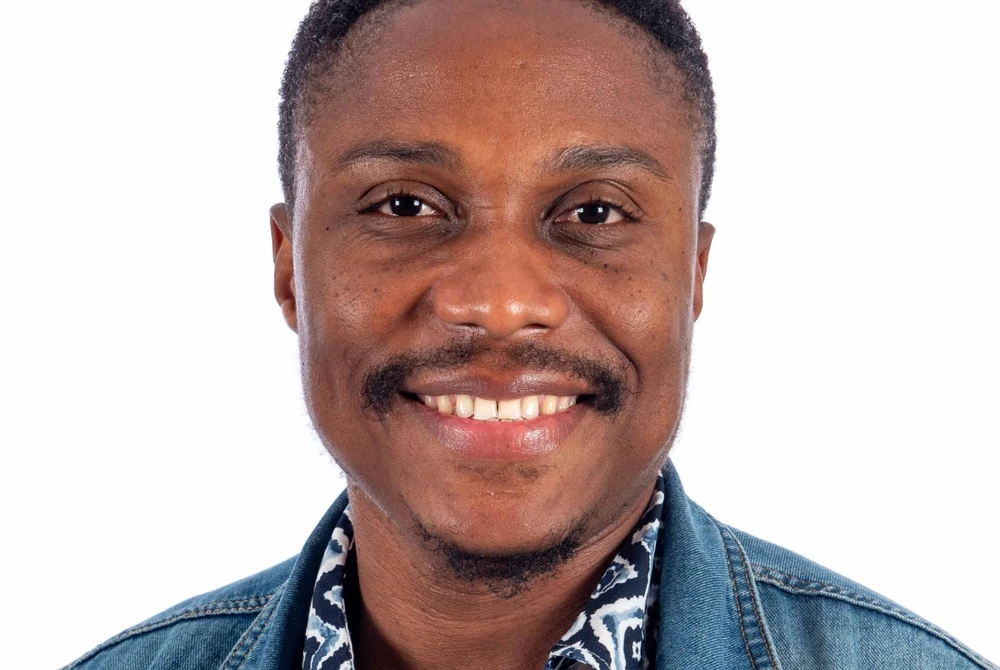
Chikezie E. Uzuegbunam (PhD) is a Senior Lecturer and Deputy Head of School (Research) in the School of Journalism and Media Studies at Rhodes University, South Africa. A digital media sociologist, his long-standing research, which he frames as decolonial digitalities, examines coloniality, power and everyday agency across Africa’s digital cultures: from youth digital cultures, media and information literacy, and mis- and disinformation to the ethics and sociology of artificial intelligence. He is an NRF-rated researcher, a Fellow of the DHET Future Professors Programme, and a Carnegie Fellow, and his scholarship has been recognised with the IAMCR Decolonising the Digital Award (2025) and consecutive African Studies Association Esteemed Fellowship Awards (2023 and 2024). This piece draws on two of his recent works: “Towards a Decolonial AI? (Re)visiting Contentious Artificial Intelligence Issues in Africa,” in the Handbook on Anthropology and AI (Edward Elgar, 2026), and “Future-Proofing Emerging Technologies (Artificial Intelligence) in African Democracy,” in the Routledge Companion to Digital Media and Democracy (Routledge, 2026).
This piece was written as part of, and made possible by, the CDEP and DISC Critical AI Policy Virtual Fellowship, which the author gratefully acknowledges.
This blog is part of a series of articles shared with us by the Digital Society Research Group (DISC) written by Virtual Fellows engaging in critical approaches to AI policy.