
Placing juror wellbeing at the heart of criminal justice reforms in Ukraine
By Dr Hannah Fawcett, Senior Lecturer in Psychology
Jurors are an overlooked group within the criminal justice systems internationally due to the transience of their role and the legal restrictions around discussing their jury experience. My research, alongside Dr Matt Brooks, focuses on the wellbeing of jurors and how we can support people through this often difficult and stressful civic duty. Jury service has numerous stressors, including exposure to graphic evidence, disruption to work and routines, financial hardship, and the pressure of reaching a verdict. Our research has shown that short-term exposure to graphic evidence can cause signs of distress consistent with post-traumatic stress disorder (PTSD), with some forms of evidence perceived as creepy and scary by (mock) jurors. It is therefore great to see governments starting to recognise the importance of juror wellbeing through the recent Juror Wellbeing Support Pilot Scheme in England and Wales, ongoing collaboration between the Ministry of Justice and our research team in the School of Psychology and, more recently, my work with international partners such as the Ukrainian government.
Reforms to the criminal justice system in Ukraine are underway as the Ukrainian government seeks to enhance transparency and promote fair and ethical decision-making. These reforms include plans to enhance the frequency and scope of trials by jury. However, Ukraine has seen a period of intense stress for the population at large, with the ongoing war leading to 50,000 civilian fatalities and intense bombardment of schools, homes and public buildings (United Nations, 2025). With 25% of the population of Ukraine estimated to have PTSD and up to 57% at risk of developing PTSD, completing jury service is likely to exacerbate distress and increase PTSD levels for Ukrainian citizens. This poses the question: how can the wellbeing of jurors be supported among an already traumatised population?
On 10 September, I was invited by the UK Ministry of Justice (MoJ) to meet with a delegation of politicians and legal professionals from Ukraine to share my work on juror wellbeing. We had powerful discussions about how to support a population who have experienced so much trauma through the challenges of jury service. Our conversations focused on the importance of embedding transparency, support and trauma-informed practice into planned jury reforms in Ukraine. Some of the research-informed strategies I shared included fostering appreciation and meaning-making, financial compensation, tailored mental health support, and stringent criteria for the inclusion of traumatic evidence in court.
Whilst I was invited to the meeting to share my expertise, I gained so much from the delegates too. It was a very moving meeting, with delegates sharing their own experiences of war, loss, fear and trauma. It was incredibly rewarding to share my research directly with policymakers and practitioners and contribute to the wellbeing of thousands of jurors in Ukraine. It truly was an honour to meet with such a distinguished group of professionals, and to see the careful consideration given to how our research could be implemented in practice in Ukraine.
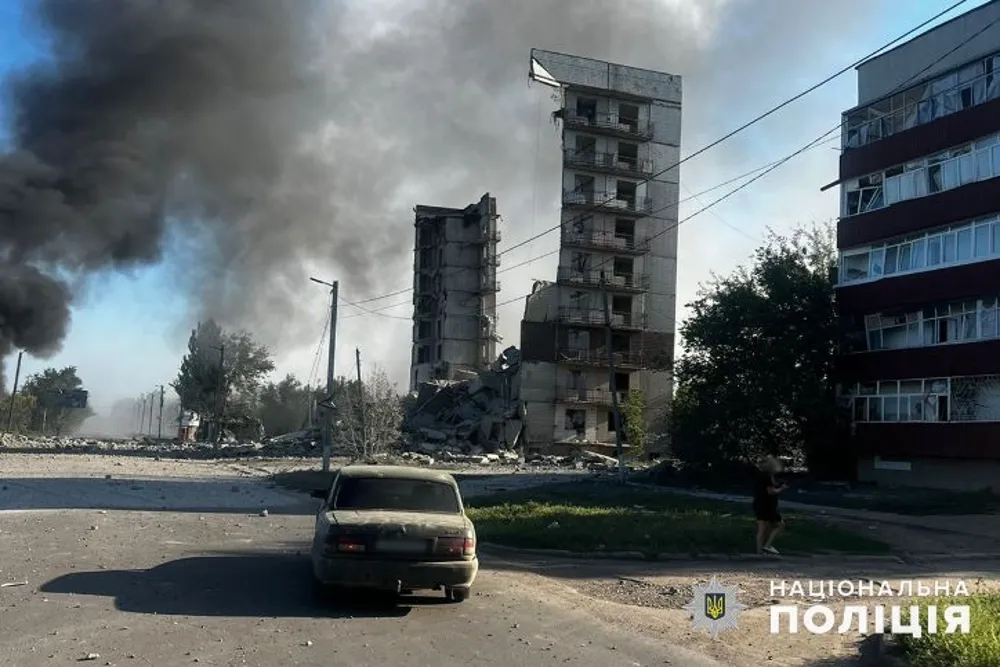
Destruction in Myrnohrad after Russian attack (Ukrainian National Police- shared under Creative Commons License)
25% of the population of Ukraine estimated to have PTSD and up to 57% at risk of developing PTSD due to the ongoing war in Ukraine.