
MetroPolis in Action: Supporting Researchers to Shape Policy and Practice
From supporting juror wellbeing in Ukraine to protecting heritage sites in Britain, MetroPolis continues to empower Manchester Met researchers to connect their expertise with decision-makers and drive real-world change.
Through tailored policy support, mentoring, and direct engagement opportunities, MetroPolis enables academics to translate their research into influence, strengthening the bridge between evidence, practice, and policy.
Earlier this autumn, Dr Hannah Fawcett shared her research on juror wellbeing with a delegation of Ukrainian politicians and legal professionals, following an invitation from the UK Ministry of Justice. Supported by MetroPolis, which funded her travel expenses, Dr Fawcett drew on her research into the emotional and psychological challenges faced by jurors to discuss how trauma-informed approaches could be embedded into Ukraine’s planned jury reforms. Her contributions, including strategies for mental health support, fair compensation, and limiting exposure to traumatic evidence, helped shape an international dialogue on justice and wellbeing.
“It was incredibly rewarding to share my research directly with policymakers and practitioners,” said Dr Fawcett. “To see careful consideration given to how it could be implemented in practice was an honour.”
Back in the UK, Dr Tamara West’s work through the Cultural Heritage, People and Place (CHerPP) project has addressed a pressing gap in national evidence on how cultural heritage contributes to community wellbeing and local economies. Supported by MetroPolis and commissioned by the Department for Culture, Media and Sport (DCMS), Dr West and her collaborators at Liverpool John Moores University produced a Rapid Evidence Assessment examining the impact of reduced local authority funding on small and medium-sized heritage organisations.
Their research found that many community-run heritage sites are essential to local identity yet vulnerable to short-term funding models and austerity-driven cuts. By combining case studies across West Yorkshire with national analysis, Dr West’s work is informing the development of stronger, more resilient policy approaches to valuing culture and place.
Meanwhile, Hannah Hesselgreaves, Director of the Policy Evaluation and Research Unit (PERU), attended the Labour Party Conference 2025 in Liverpool, with MetroPolis sponsoring her admission to ensure Manchester Met’s research expertise continues to inform national policy conversations. Over two days of debates and discussions, she joined university colleagues and civic leaders to engage with key themes such as lifelong learning, neighbourhood renewal, and public service reform.
Reflecting on the conference, Hesselgreaves highlighted how research can bridge the gap between political discourse and everyday experience: “No one sits around talking about ‘civil society’, but we do talk about schools, neighbourhoods and the state of our streets. Those are the conversations where evidence and lived experience meet.”
Together, these examples show how MetroPolis helps researchers extend the reach and relevance of their work, whether through international policy influence, national commissions, or direct engagement with political decision-makers.
By connecting research with the realities of policymaking, MetroPolis continues to champion Manchester Met’s mission to ensure that knowledge makes a tangible difference in the world.
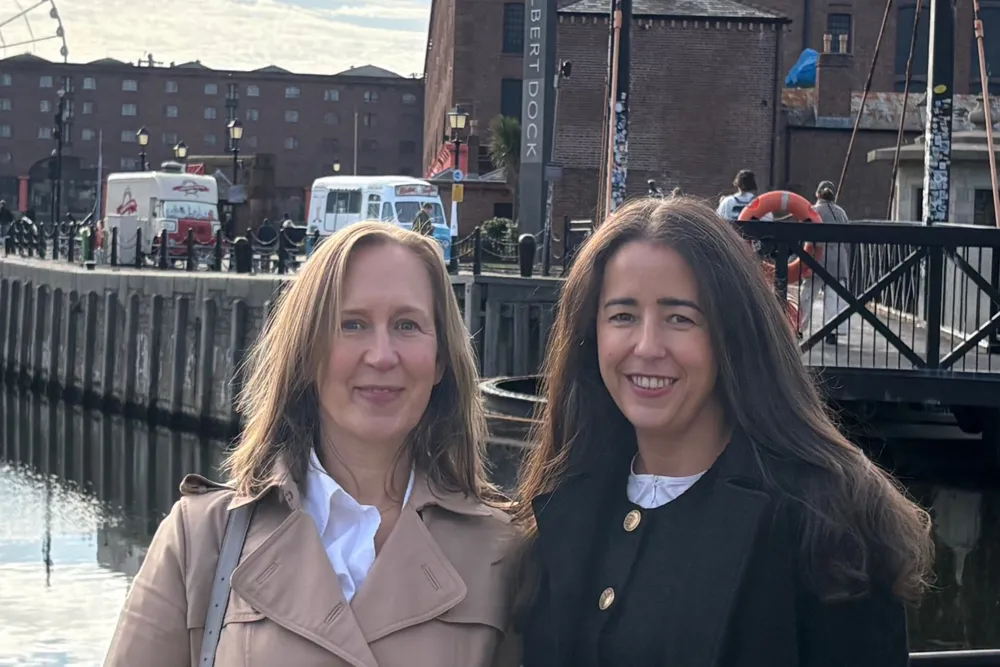
Dr Tamara West (left) with research Co-lead Prof Rafaela Neiva Ganga from Liverpool John Moore’s University, at the Albert Docks in Liverpool.