
Improving children’s futures in Chile through the Chancellor’s Fellowship
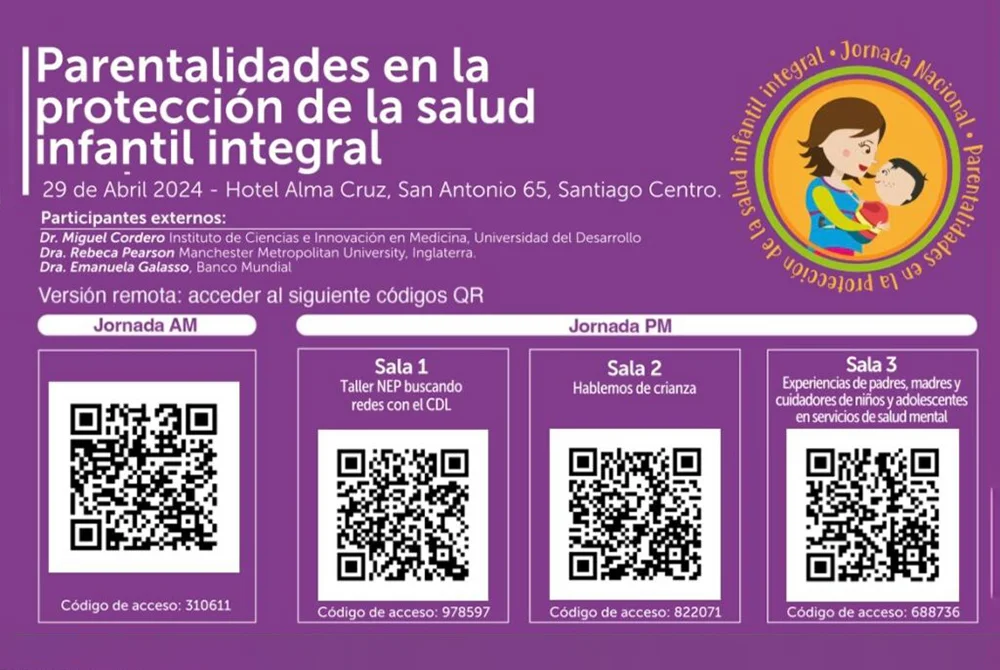
In April, Professor Rebecca Pearson (Health and Education) presented her research on parental influences on mental health from childhood to adolescence to the Ministry of Health in Chile.
Professor Pearson is a psychologist and epidemiologist, whose work integrates traditional epidemiological methods with new technologies to understand the relationships between parenting and mental health in children and adolescents.
As part of her presentation, which was reported on by CNN Chile, Professor Pearson shared key findings and practical recommendations from her research. This included the need for a relational approach in understanding children’s mental health, the damaging impacts of waiting lists, and the importance of clear messaging on expert help and basic support for families. Professor Pearson additionally introduced her innovative work on wearable technologies like head-cams, which she has employed to measure parent-infant behaviour.
The visit to Chile was funded through the MetroPolis Chancellor’s Fellowship scheme, which offers academics an opportunity to undertake a secondment with an external policy-focused organisation. For her Fellowship, Professor Pearson is collaborating with the Chilean Ministry of Health and Universidad del Desarrollo to identify opportunities to strengthen parent-child relationships and guide policy in the field of children’s mental health in Chile.
In addition to her presentation to the Ministry of Health, during this visit Professor Pearson presented her research findings to the Universidad del Desarrollo and led an interactive workshop on Directed Acyclic Graphs (DAGS), a causal diagram which can be effectively applied to decades-worth of data on mental health in families. Looking ahead to her next visit, Professor Pearson has been developing an interactive, immersive exhibition for community museums and art and science centres, designed to bring together local researchers, policymakers and the wider community.
The Fellowship has also offered Professor Pearson the opportunity to gain insight from existing child mental health programs in Chile, including ‘Chile Crece Contigo’, an ambitious national parenting and child development support program.
‘What was so key in my trip was visiting the health care settings and speaking to multi-disciplinary teams within the front line of child and adolescent mental health support, I saw first-hand the parallels and differences in the UK and Chile systems and challenges we all face.
On the experience and next steps for the Fellowship, Professor Pearson commented:
“I was struck by the creativity, enthusiasm and commitment to improving the lives of families and the desire to work together. Together we found many clear goals for practical solutions and thinking not only about what work ‘can’ but what families want. A particular highlight for me is starting the conversation and groundwork for incorporating more of a voice from Lived Experience within mental health services in Chile and this will be a focus of my next visit.”
To find out more about this research, please contact Professor Rebecca Pearson via e-mail. You can also find her on LinkedIn.