
From Circular Ambition to Circular Action: Where Are We Now?
By Professor Sally Randles, Manchester Metropolitan University Business School
Five years ago, the Greater Manchester REDUCES Action Plan set out a vision for a more circular economy. REDUCES (REthinking Sustainable Development in European Regions by Using Circular Economy Business Models) was a European-funded project that brought together six regions to explore how circular economy approaches could help deliver economic growth while reducing environmental impacts. Put simply, it was about finding practical ways to use resources more efficiently, reduce waste and keep materials in circulation for longer.
Looking back from 2026, much of the agenda identified by REDUCES remains highly relevant, but the conversation has matured. Five years ago, the challenge was making the case for circular economy principles. Today, there is far greater awareness among policymakers, businesses and communities of the need to move beyond the traditional take-make-dispose model. The challenge is no longer convincing people that circularity matters. The challenge is scaling it.
The action plan focused on two priority areas: developing a regional approach to textile waste through a dedicated textiles working group and building circular economy capability through carbon literacy and training initiatives. These were deliberately practical interventions, designed to create the networks, skills and evidence needed for longer-term systems change.
Since then, circular economy thinking has become increasingly embedded within regional discussions around net zero, resource efficiency and sustainable growth. The issue of textiles has moved up the policy agenda as awareness has grown around the environmental impacts of fast fashion, waste generation and supply chain emissions. The establishment of the Greater Manchester Sustainable Textiles and Fashion Group helped bring together stakeholders across manufacturing, retail, recycling and waste management to explore circular solutions for the region.
At the same time, the emphasis on skills and capacity building has proved prescient. Organisations increasingly recognise that achieving net-zero ambitions requires changes in behaviour, procurement, business models and organisational culture, not simply technological innovation. The carbon literacy agenda championed through REDUCES anticipated this shift.
Yet significant challenges remain. Resource consumption continues to rise, many circular business models struggle to achieve scale, and economic pressures can make reuse, repair and remanufacturing difficult to prioritise. The original REDUCES partnership also recognised that not every circular activity is automatically sustainable; understanding environmental impacts and avoiding unintended consequences remains essential.
Perhaps the most important legacy of REDUCES is not a single project or intervention, but a change in mindset. The programme encouraged policymakers, businesses and universities to think beyond waste management and towards whole-system approaches to production and consumption. That shift remains vital as Greater Manchester continues its journey towards a more resilient, low-carbon and resource-efficient economy.
Five years on, the question is no longer whether a circular economy is possible. It is how quickly we can move from promising pilots and partnerships to economy-wide transformation. At Manchester Metropolitan University Business School, that conversation is continuing through the £1.1 million Place-based Circular Society Innovations (CSI) project, funded by the Economic and Social Research Council (ESRC). Building on many of the themes explored through REDUCES, the project examines how circular initiatives can deliver not only environmental benefits, but also social value, inclusion and community wellbeing. By working with policymakers, local authorities, businesses and community organisations across Greater Manchester and internationally, CSI aims to identify the practical conditions needed to scale circular innovations and support a more equitable and sustainable future. In many ways, it represents the next chapter in the journey that REDUCES helped to begin.

The Place-based Circular Society Innovations (PB-CSI) project examines how circular economy initiatives can be designed around the specific needs, assets and challenges of places and communities
To keep in touch with the Pb-CSI project, and receive our bi-monthly newsletters, readers can join the Pb-CSI Knowledge Action Network (KAN). You can join the KAN by following this link to a short sign-up form. By signing up, you’ll receive their bi-monthly newsletter and keep in touch with a wealth of case studies, hear about, and contribute to Pb-CSI initiatives ’
For more information about REDUCES and the report:
mcrmetropolis.uk/wp-content/uploads/2026/11/Final-GM-SQ-report-Sept2020.pdf
For more information about the ESRC CSI project:

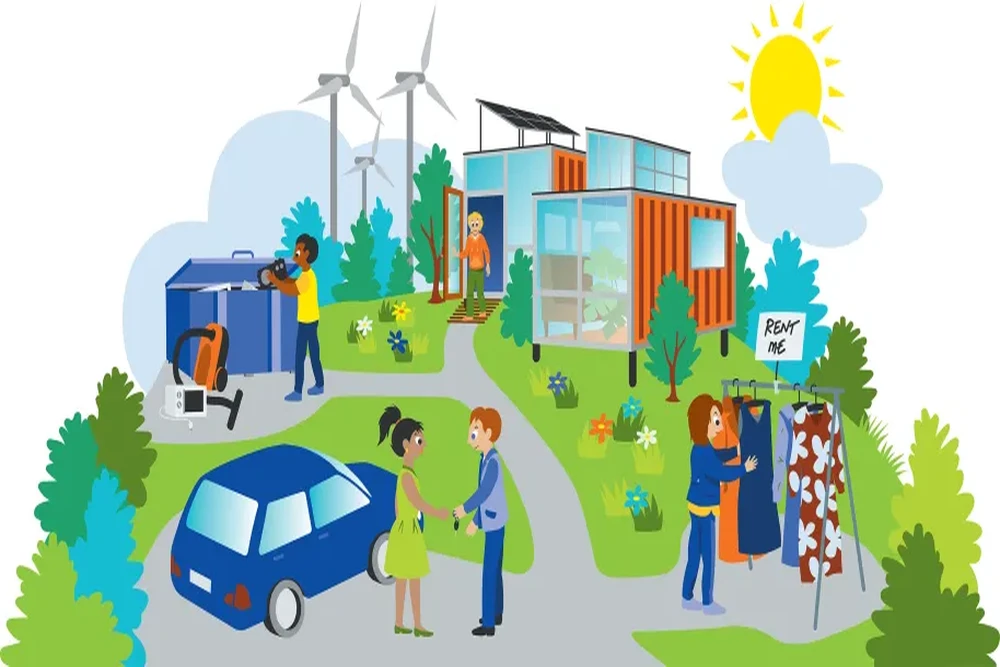
Five years after the Greater Manchester REDUCES Action Plan set out a vision for a circular economy, this article reflects on its lasting influence, the progress made, and the challenges that remain in scaling circular solutions across the region.
The Place-based Circular Society Innovations (PB-CSI) project is funded by the Economic and Social Research Council (ESRC).